Cities play a critical role in addressing climate change, as the buildings and transportation systems that support daily life account for the majority of urban greenhouse gas emissions. In Edmonton, these challenges led to a bold vision to transform the former municipal airport lands into a new kind of neighbourhood designed to support sustainable living and reduce environmental impact.
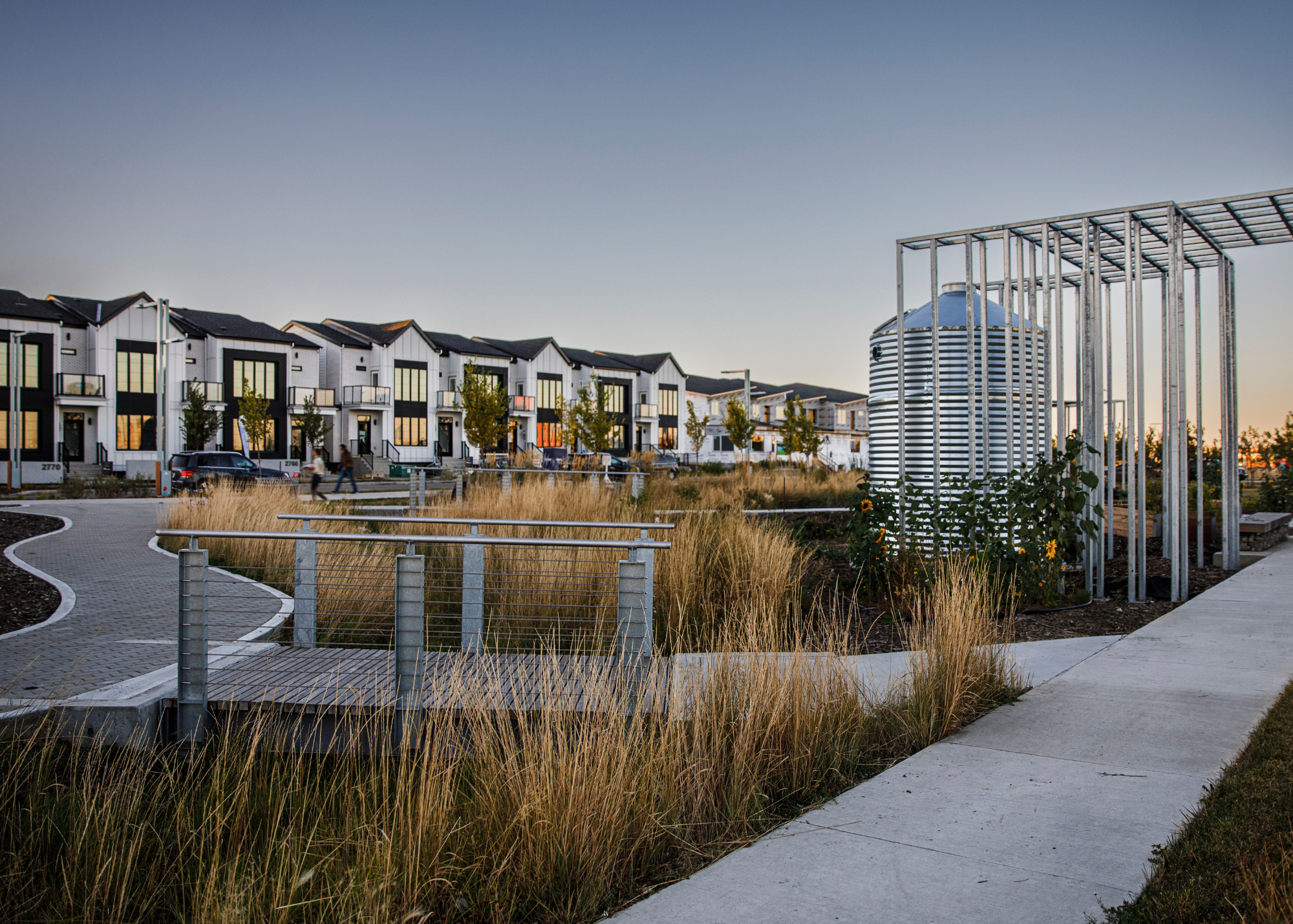
Blatchford is being developed by the City of Edmonton as a low-carbon community with a neighbourhood-wide district energy system that provides renewably-sourced heating, cooling, and hot water services to the homes and buildings. Builders in the community must meet custom Green Building Standards that are intended to go above and beyond minimum building code requirements for energy efficiency, while the neighbourhood is uniquely designed to encourage walking, cycling, and transit use. Low Impact Development features such as bioswales, urban stormwater channels, and rainwater harvesting also help manage water naturally across the site.
This project provides a model for sustainable urban development in Edmonton and beyond. When complete, Blatchford is anticipated to reduce greenhouse gas emissions by about 30,000 tonnes annually compared to a typical Edmonton community – and be home to one of the largest renewable district energy systems of its kind in Canada.